Toronto’s finances are stabilizing. How Mayor Chow inherited a $1.8B shortfall and turned it into a $600M improvement in just one year.
By Staff Writer — CityWorks Toronto
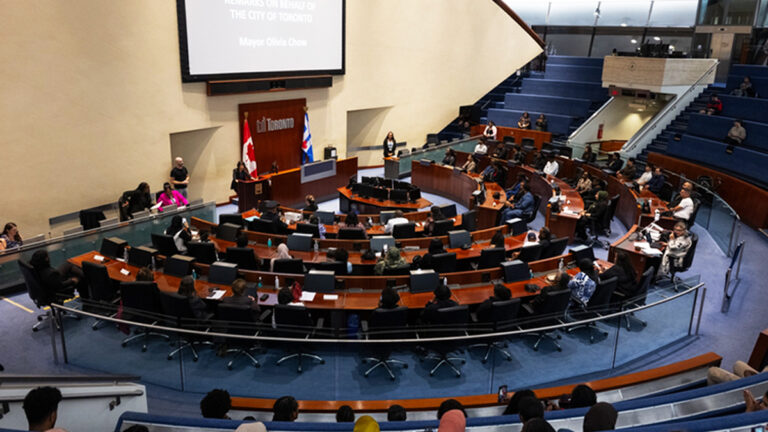
When Mayor Olivia Chow stepped into City Hall in late 2023, one of the first challenges she confronted was a deep structural fiscal shortfall — a looming $1.8 billion gap in the City of Toronto’s operating budget that constrained services and elevated pressure on property taxes.
Fast-forward one year, and that gap has shrunk significantly — down to about $1.2 billion going into the 2025 budget process — representing a $600 million improvement in the city’s financial position.
For a city of nearly three million residents with complex service demands, that’s no small feat. Here’s how Toronto’s fiscal story began to unwind in favour of stability, sustainability and smarter spending.
Fiscal Reality Meets Political Will
When the Chow administration inherited the books, long-standing budget pressures from shelter costs, transit funding and infrastructure renewal were compounded by a pandemic hangover and rising service costs. Rather than defer difficult choices, city leadership took bold steps to stabilize the books while protecting core public services.
Chow and her budget team — led by Budget Committee Chair Councillor Shelley Carroll — pivoted to a multi-year financial strategy that blends spending restraint with strategic investment. This included a combination of operating efficiencies, targeted revenue measures, and successful negotiations with other levels of government.
The 2025 budget reflects this approach: alongside an $18.8 billion operating plan, the city secured $680 million in reductions and offsets and adopted a longer-term capital plan that directs resources where they are most needed.
Pragmatic Tax Strategy and Improved Borrowing Costs
To help bridge the gap without drastic service cuts, the city continued with property tax increases — including a 9.5 per cent hike in 2024 and a 6.9 per cent increase in 2025 — alongside targeted relief for low and moderate-income households.
While higher taxes are never popular, this disciplined revenue strategy is now yielding dividends: Toronto’s credit rating has been upgraded to AA+ for the first time in over two decades, lowering the city’s borrowing costs and signalling confidence to investors and taxpayers alike.
Strategic Investments Alongside Discipline
Good budget news isn’t just about cutting back. The city’s 2025 and 2026 budgets have carved out funding for community priorities that resonate across Toronto neighbourhoods:
- Frozen TTC fares and service improvements that make daily transit more predictable and affordable.
- Expanded school food programs and supports for renters and vulnerable residents, reflecting a focus on affordability and equity.
- Homeowner support programs — from basement flooding protection grants to energy upgrade loans — to help families keep costs down and protect their homes.
Partnerships Beyond City Hall
Chow’s fiscal gains have not come from municipal action alone. Strategic deals with the Province of Ontario and the federal government — such as the upload of major roadways and support for capital investments — have unlocked hundreds of millions for transit, housing and other priorities.
Even with these successes, challenges remain — including a still-substantial shortfall and funding pressures on shelters and transit. But the fact that Toronto is now able to shrink its deficit while investing in services Torontonians care about is a testament to disciplined budgeting and collaborative governance.
Looking Ahead: Steady, Strategic, Sustainable
For Etobicoke residents navigating rising living costs, Scarborough families relying on TTC and young professionals wondering about the city’s long-term health, this budget turnaround matters in real, tangible ways.
Mayor Chow’s fiscal team hasn’t balanced the books overnight — but in one year, the city has gone from deficit danger to disciplined progress, positioning Toronto for a more financially resilient future.
As the next budgets unfold, the principle remains clear: smart stewardship can coexist with smart investment — and the city’s bottom line can be stronger for it.