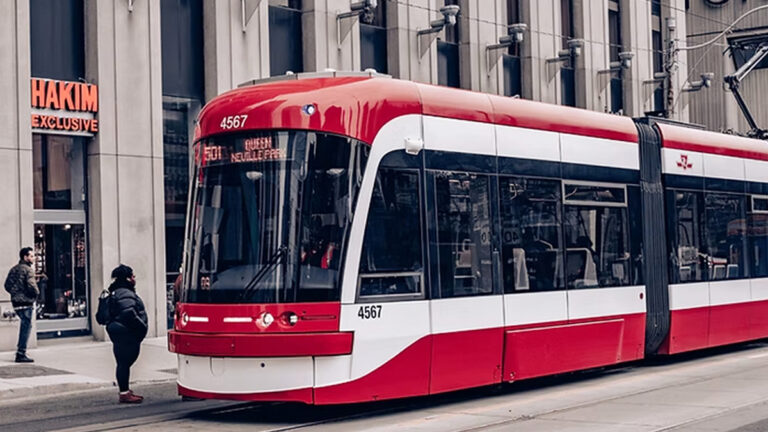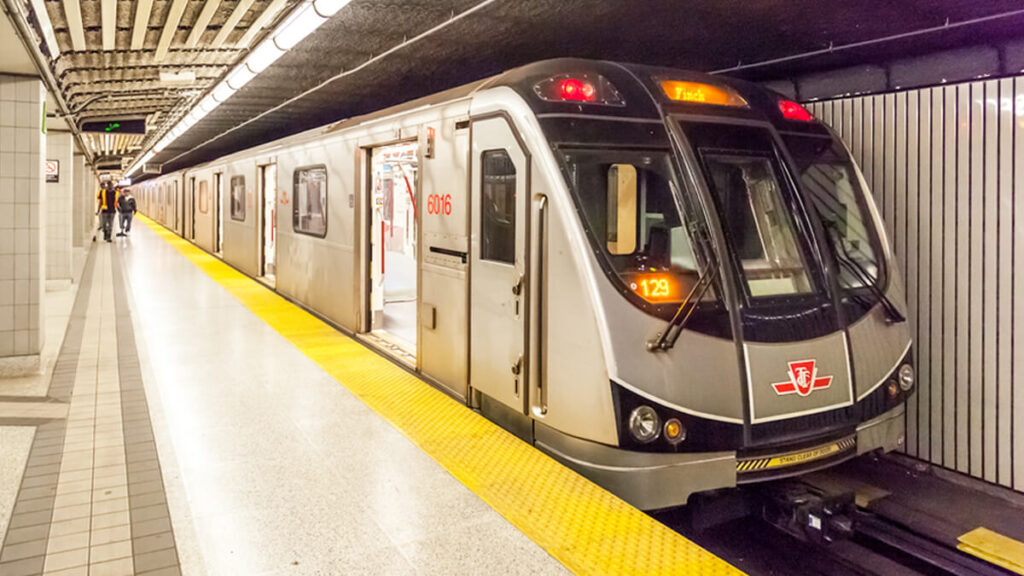
The TTC has added six extra trains on Line 2 in order to offer trains every ~2:20 during morning rush. Mayor Chow focused on rebuilding transit capacity and reliability.
By Staff Writer — CityWorks Toronto
For many Torontonians, the true measure of a functioning city is whether transit shows up — on time, often, and reliably. When Mayor Olivia Chow took office on July 12, 2023, Toronto’s transit system was still recovering from years of pandemic disruption, operator shortages, deferred maintenance and uneven service levels.
Crowded platforms, longer waits and inconsistent bus service had eroded rider confidence. Rebuilding TTC capacity — not just maintaining it — became a clear priority for the new mayor and city council.
Between mid-2023 and the end of 2024, that focus began to translate into concrete improvements: more trains, more buses, and more reliable service, particularly during peak commuting hours.
A Stronger Start on Line 2
One of the most visible improvements came on Line 2 Bloor–Danforth, a critical east-west artery serving Etobicoke, Scarborough and neighbourhoods in between.
By 2024, the TTC had added six additional trains during the morning rush, allowing service every approximately two minutes and twenty seconds at peak times. This increase reduced platform crowding, eased passenger loads, and made commutes more predictable — especially at busy transfer points and stations with high boarding volumes.
The additional trains were made possible by a combination of improved fleet availability and staffing stabilization, both of which had been strained in earlier years.
Rebuilding Capacity After the Pandemic
Transit service reductions during the pandemic were unavoidable, but the challenge for city leadership was ensuring those reductions did not become permanent.
Under Mayor Chow, the city’s approach shifted toward actively restoring service to meet real demand, rather than waiting for ridership to fully rebound on its own. Budget decisions in 2024 reflected this philosophy, prioritizing operational funding to:
- Increase subway frequency where crowding had returned
- Expand bus service on high-ridership routes
- Reduce service gaps caused by operator shortages
This strategy recognized a simple truth: reliable service drives ridership, not the other way around.
Bus Service: Quiet but Critical Improvements
While subway improvements often grab headlines, bus service affects more neighbourhoods — particularly in Scarborough and Etobicoke, where many residents rely on buses for the first and last leg of their commute.
Throughout 2024, the TTC focused on restoring scheduled service hours, deploying additional buses on crowded routes, and improving on-time performance. As operator hiring and retention improved, the agency was able to reduce cancelled trips and improve consistency — a key concern raised by riders in previous years.
For families, seniors and shift workers, these improvements meant shorter waits and fewer surprises, even if the changes were less visible than new trains.
Reliability as a Policy Choice
Mayor Chow consistently framed transit reliability as a matter of public trust. Rather than focusing solely on long-term expansion projects, the administration emphasized making the existing system work better, every day.
That focus aligned with broader city goals: reducing traffic congestion, supporting affordability, and ensuring equitable access to jobs, education and services. Reliable transit is not just a transportation issue — it’s a quality-of-life issue.
The city’s financial stabilization efforts also played a role. Improved budget certainty allowed council to protect TTC operating funding, ensuring that service gains could be sustained rather than rolled back.
Progress, Not Perfection
By December 2024, challenges remained. Aging infrastructure, tight operating margins and fluctuating ridership continued to test the system. But compared to mid-2023, the direction was clear.
More trains on Line 2, improved bus reliability, and a renewed focus on service quality marked a shift from crisis management toward system rebuilding.
For daily riders across Toronto, these changes added up to something meaningful: a transit system moving back toward reliability — one train, one bus, one commute at a time.